
Maslenitsa in Ukraine: History, Traditions, and Key Dates
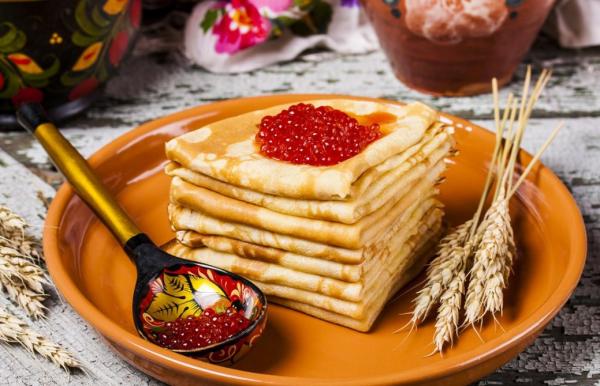
Maslenitsa (in Ukrainian: Масниця or Масляна, also known as Сирна седмиця / Cheesefare Week or Колодій) is one of the most joyful and flavorful folk holidays in Ukraine. It is a week-long celebration that bids farewell to winter, welcomes the approaching spring, and serves as the final period of indulgence before the strict Great Lent. Blending ancient pagan roots with Christian elements, Maslenitsa emphasizes family gatherings, abundant food (especially dairy and pancakes), forgiveness, and fun rituals.
Historical Background of Maslenitsa
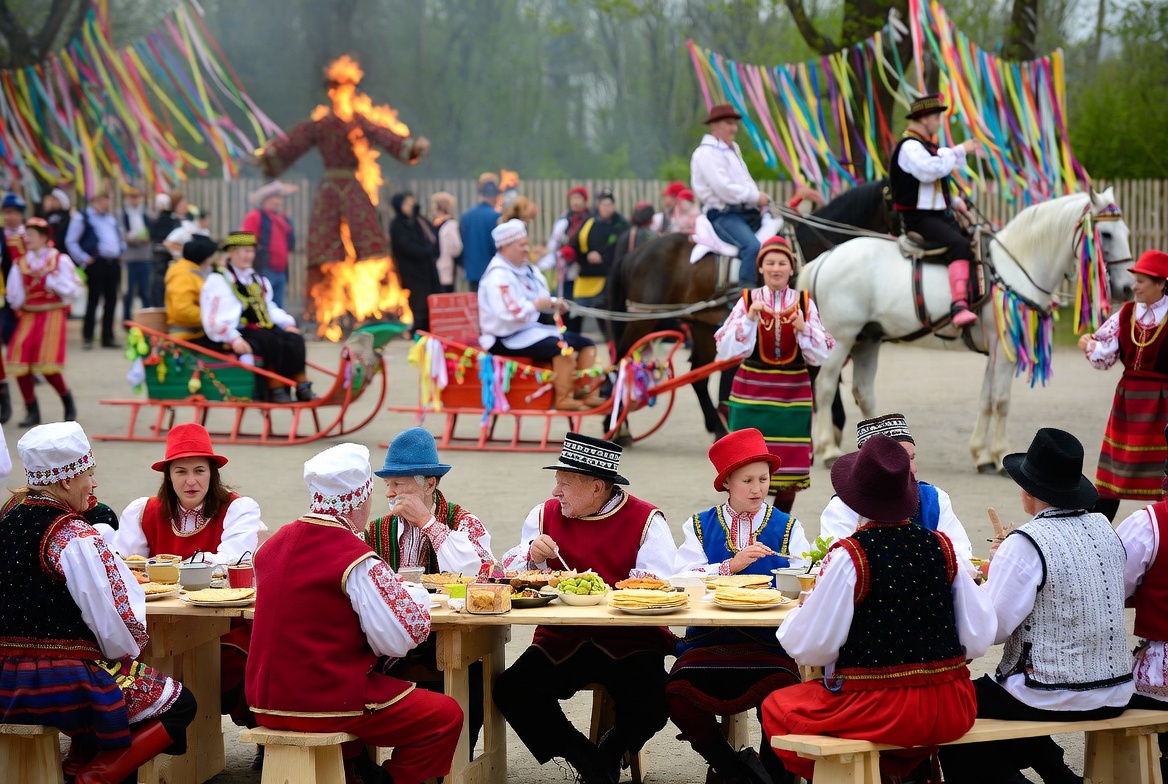
Maslenitsa's origins trace back to pre-Christian Slavic pagan times, likely around the 4th century AD or earlier. It was originally a spring equinox festival celebrating the sun's return, the end of winter, and the renewal of nature. Round, golden pancakes (or similar flatbreads) symbolized the strengthening sun, while bonfires and effigies represented the defeat of cold and darkness.
After the Christianization of Kyivan Rus' in 988 AD, the Church did not abolish the holiday but adapted it into the liturgical calendar as Cheese Week (Сирна седмиця) — the last week before Great Lent, when meat is already forbidden, but dairy products, eggs, butter, cheese, and fish are still allowed. This made it a time of feasting on "permitted" rich foods before the 48-day fast.
In Ukraine, the holiday has unique regional flavors: in Western Ukraine and Polissia, the KOLODIY ritual (involving a wooden log symbolizing marriage and family) was especially prominent. In central and eastern regions, emphasis was on varenyky (dumplings) with cheese, which some consider more traditionally Ukrainian than the blini (pancakes) popularized during the Russian Empire and Soviet era. Despite Soviet suppression of religious aspects, folk customs like baking, visiting relatives, and burning effigies survived and thrive today.
Key Maslenitsa Dates in 2026
Maslenitsa dates vary each year, depending on Easter (Великдень). In 2026, following the Orthodox calendar used by the Orthodox Church of Ukraine (PCU) and the Ukrainian Greek Catholic Church (after their adoption of the Revised Julian calendar):
Maslenitsa runs from Monday, February 16, to Sunday, February 22, 2026.
Great Lent begins on Monday, February 23, 2026.
Easter falls on April 12, 2026.
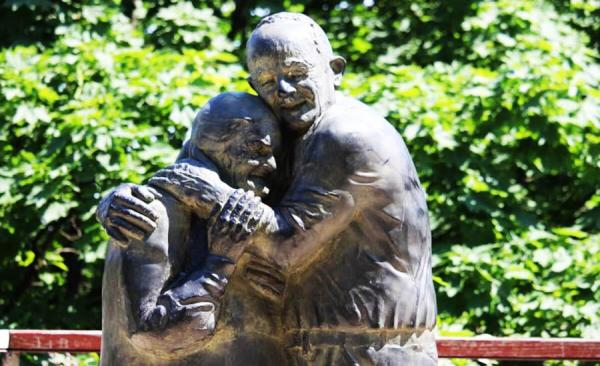
This week is often called Syrna sedmytsia (Cheese Week) in church contexts. The final day, February 22, is Forgiveness Sunday (Прощена неділя), when people ask for and grant forgiveness to prepare spiritually for Lent.
Maslenitsa Traditions and Customs in Ukraine
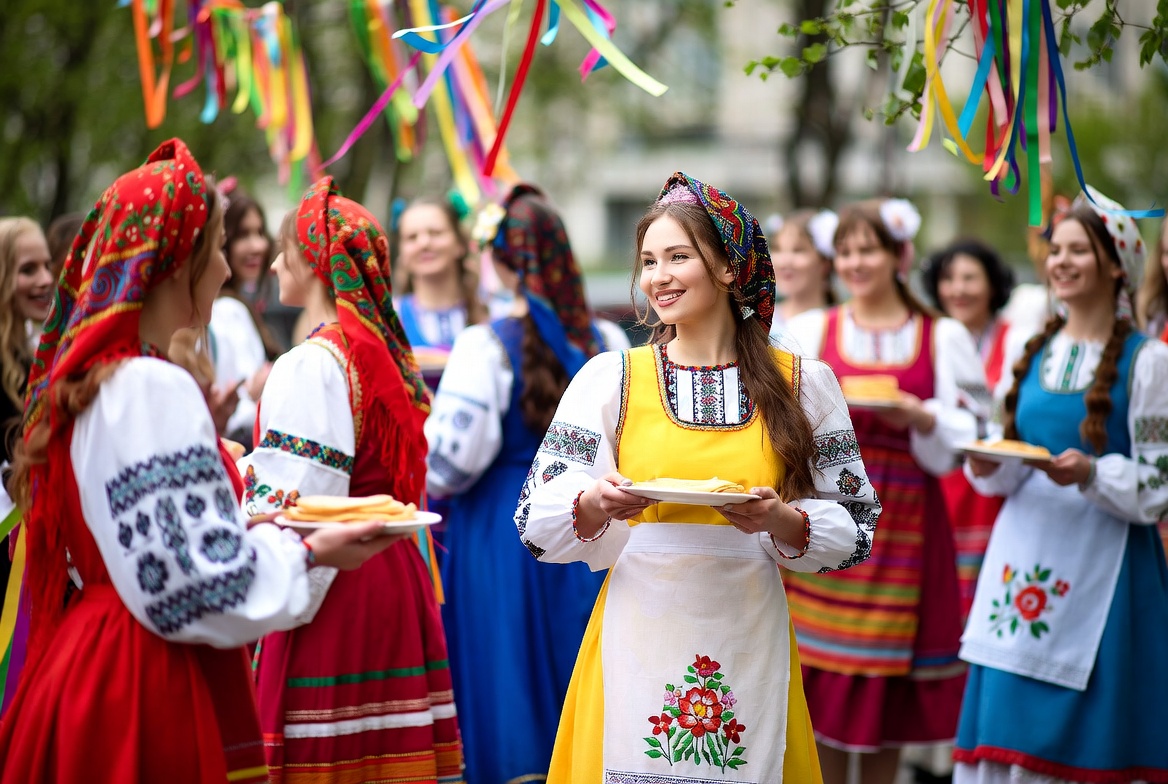
Maslenitsa is a family-oriented, hospitable holiday full of warmth, laughter, and symbolic acts. Key elements include:
Main Foods:
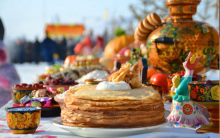
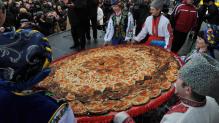
- Mlyntsi (thin pancakes/crepes) — golden and round like the sun — served with sour cream, butter, honey, jam, cheese, or savory fillings.
- Varenyky (boiled dumplings) stuffed with farmer's cheese (творог), potatoes, or mushrooms — often seen as more authentically Ukrainian.
- Dairy-rich dishes: syrniki (cheese pancakes), grechany mlyntsi (buckwheat pancakes), borscht with fish, and plenty of butter and eggs.
KOLODIY Ritual (especially in Western Ukraine):
A wooden log (kolodka) "is born" on Monday, "christened" on Tuesday, "married" mid-week, and "buried" or playfully "beaten" on Friday/Saturday. Unmarried young people had the log tied to them as a humorous nudge toward marriage the next year.
Daily Customs (traditional breakdown of the week):
- Monday — Meeting / Zustrich (baking begins, "birth" of the kolodka).
- Tuesday — Flirting / Zahrayannya (youth matchmaking and fun).
- Wednesday — Gourmand / Lasunka (son-in-law visits mother-in-law for treats).
- Thursday — Revelry / Rozhulyay (widest festivities, sledding, games).
- Friday — Mother-in-law's gatherings (son-in-law hosts his mother-in-law).
- Saturday — Sisters-in-law visit (daughters-in-law host relatives).
- Sunday — Forgiveness Sunday (church services, mutual apologies, burning the effigy of winter).
Burning the Effigy:
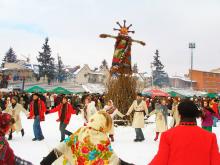
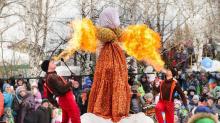
On Sunday evening, an effigy of "Lady Maslenitsa" (often a straw woman in old clothes) is burned in a bonfire amid songs, dances, and cheers. The ashes are scattered for fertile soil, symbolizing winter's end and spring's rebirth.
Other Activities:
Visiting relatives (especially in-laws) with food exchanges.
Outdoor fun: sledding, snowball fights, swings, fairs.
Charity and community events today include help for those in need.














Comments